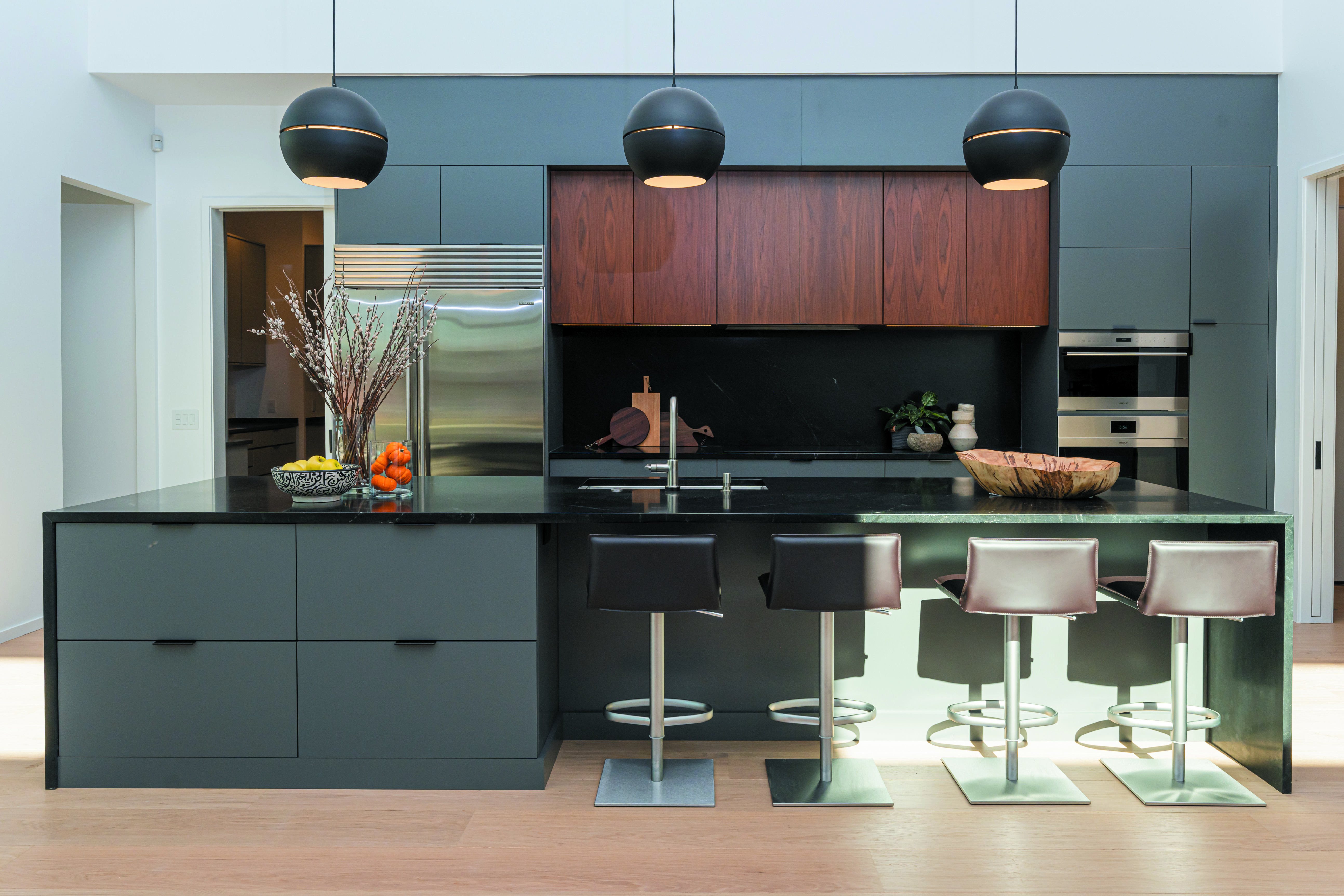
If you have been shopping for kitchen cabinets, you have probably looked at both framed and frameless lines. You have also likely heard advantages of one over the other—and realized that which is “better” often depends on who you are talking to.
At Cabinet Pro Supply we offer a large selection of both framed and frameless cabinetry in a wide range of doors and finishes. Both are great options, and each has advantages.
Framed cabinets
Framed cabinetry is the more traditional American construction. Just like the name says, it has a frame—typically about 1-1/2“ of solid wood around the front of the cabinet box. Door hinges mount to the face frame with screws. With a face frame you get three hinge and overlay options:
- Standard overlay — the door barely covers the opening of the cabinet box
- Full overlay — the door covers about 98% of the cabinet box
- Inset — the door sits inside the opening of the cabinet box
Those three looks are very different, and all are available with a framed cabinet box. For more on the flush-door look, see inset cabinetry.
Frameless cabinets
Frameless cabinets are a four-sided box without a frame on the front. The door covers about 99% of the cabinet box, giving a full, tight look where you primarily see doors and drawer fronts. There is typically one hinge option: a frameless-style hinge that mounts directly to the inside panel of the cabinet. These are often called clip hinges because they separate in half for easy removal during installation or cleaning.
We carry strong framed and frameless programs across our brand lineup—door and finish range depends on the line.
Storage myths and realities
If you have only talked to someone who sells frameless cabinets, they have no doubt mentioned the extra room inside the boxes. While there is a bit of extra usable opening, this can be misleading. There is not actually extra space in the box itself—both types use about 3/4“ for the side panels. What you do get is a larger opening in the front of the frameless box (about 3/4“ on each side). Where you gain more room in practice is in drawer boxes: drawers can use a larger percentage of the cabinet width without a face frame. A typical drawer box inside a framed cabinet will be about 1-1/2“ narrower than the drawer box in the same size frameless cabinet.
Installation and finished looks
Frameless cabinets can be trickier to install and should be handled by someone who understands the differences. Without a face frame to keep cabinets aligned as they were assembled, they can get knocked slightly out of square during shipment. With a good manufacturer and installer this is manageable, and once cabinets are screwed together and to the wall it is no longer an issue. Crown molding also has nowhere to attach on the front of the box, so it typically mounts to a nailing strip on top—again, not a big deal for an installer experienced with frameless.
On the finished look, a nice advantage of frameless is that finished sides are typically smooth—you do not have to flush sides to a face frame. Most manufacturers also have strong options for finishing cabinet ends. One recommendation: if you are ordering frameless, consider framed cabinets wherever you will have an open box (bookshelf or open display). Edge tape on the front of a frameless box does not look as finished for open cabinets, and it is not as durable as a face frame. The same idea applies to panels on either side of a refrigerator.
Which brands we sell in each construction
Frameless / full-access examples we sell: Merit, Lectus, Kith’s full-access lines, Nations DreamCraft, Mouser Euro.
Framed examples: StarMark, Kith framed, Nations Tidwell, Mouser traditional.
Browse all brands.
Not sure which construction fits your plan? Contact us in Davenport, Florida—or read how we work with contractors and DIY homeowners. Call 1-877-477-7784.